
2008 Audi RS4 — Sea Salt Rust Restoration | Dry Ice Pro Auto | Tempe, AZ
2008 Audi RS4 — Sea Salt Rust Restoration in Tempe, AZ From New Hampshire to Showroom-Ready. 1,500 lbs of Dry Ice. 35–40 Hours of Work. 10 Years of Protection.…

2008 Audi RS4 — Sea Salt Rust Restoration in Tempe, AZ
From New Hampshire to Showroom-Ready. 1,500 lbs of Dry Ice. 35–40 Hours of Work. 10 Years of Protection.
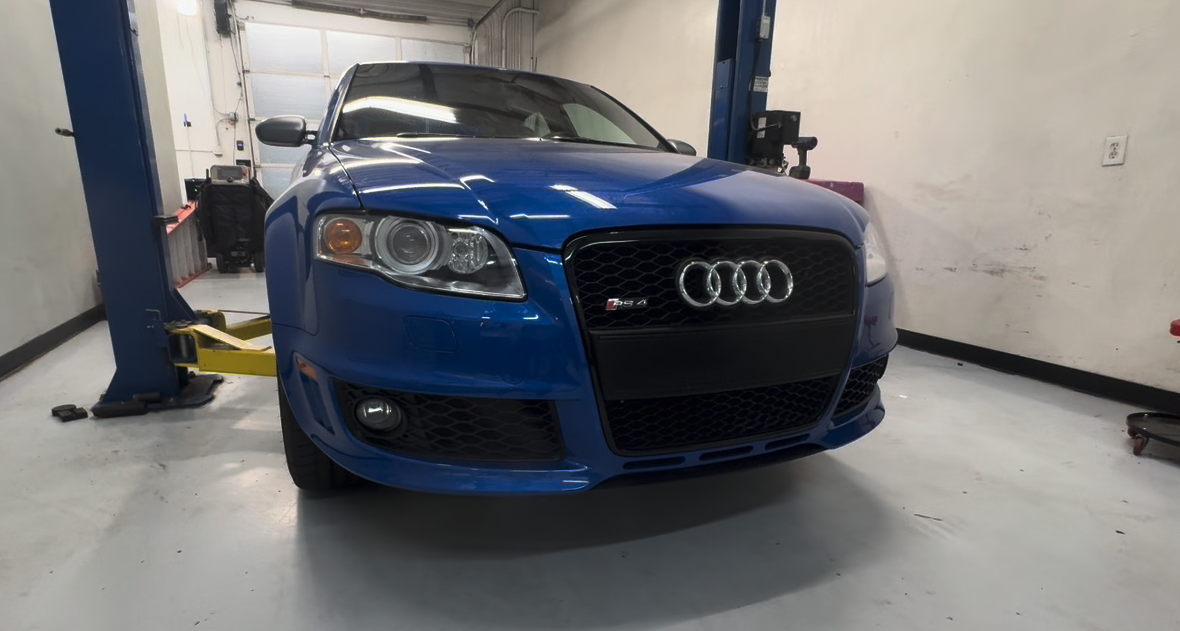
When a 2008 Audi RS4 arrived at our shop in Tempe, Arizona, it brought more than 15 years of New England winters with it. The undercarriage, suspension arms, subframe, and wheel wells were loaded with deep sea salt rust — the kind that builds up over years of Northeast road treatment and doesn't stop just because the car moved to a dry climate.
The owner made the right call. They shipped it from New Hampshire directly to Dry Ice Pro Auto in Tempe, AZ. Here's exactly what we did — step by step.
The Problem: 15 Years of New Hampshire Sea Salt Rust
New Hampshire roads get heavily salted every winter from October through April. That salt sprays up into every crevice underneath a vehicle and bonds to metal surfaces — and because salt is hygroscopic, it holds moisture against the metal even when the car is parked in a dry garage. Over 15+ years, that process creates deep, structural corrosion that no pressure washer or chemical degreaser can fully remove.
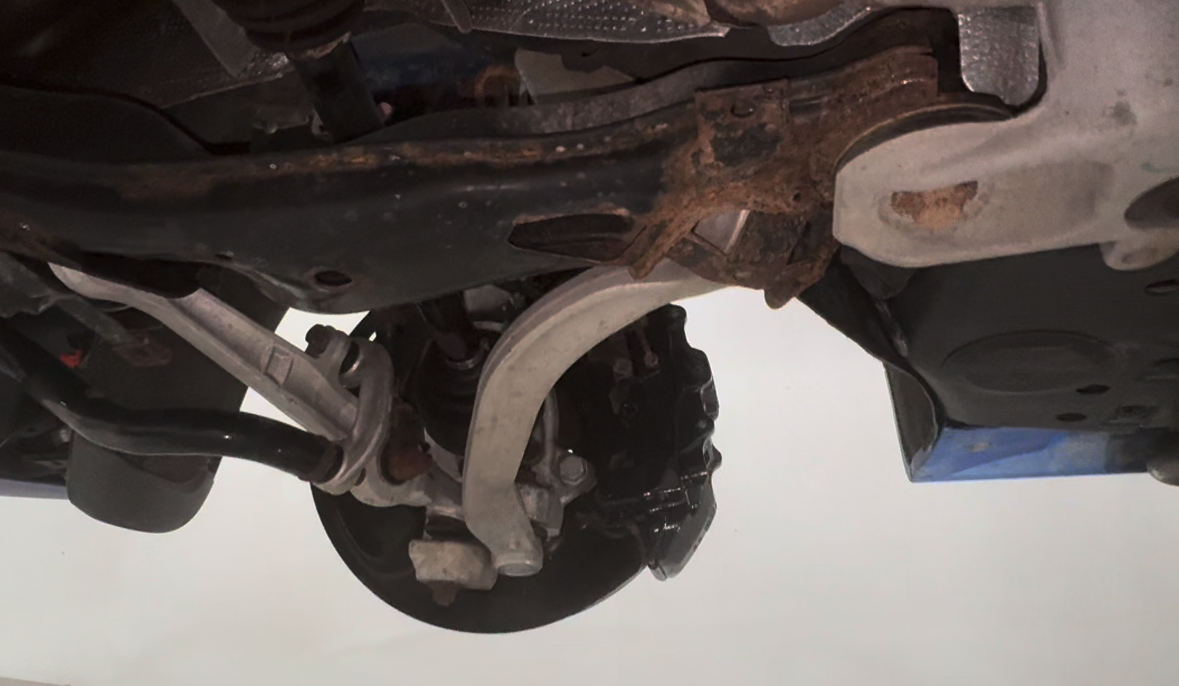
By the time this Audi arrived in Tempe, the undercarriage was carrying rust that had been working on the metal for well over a decade. Leaving it untreated wasn't an option — corroded undercarriage integrity is a safety issue, and the longer it goes untreated, the worse and more expensive the damage becomes.
Step 1 — Vehicle Inspection and Prep
Before we touched a pound of dry ice, we put the car on the lift for a full inspection. We documented rust severity across every zone — subframe, control arms, suspension mounts, wheel wells, and floor pans. Sensitive components including wiring harnesses, brake lines, sensors, and rubber bushings were masked and protected before any blasting began.
Prep work isn't glamorous, but skipping it is how jobs go wrong.
Step 2 — First Dry Ice Blast Session (1,500 lbs)
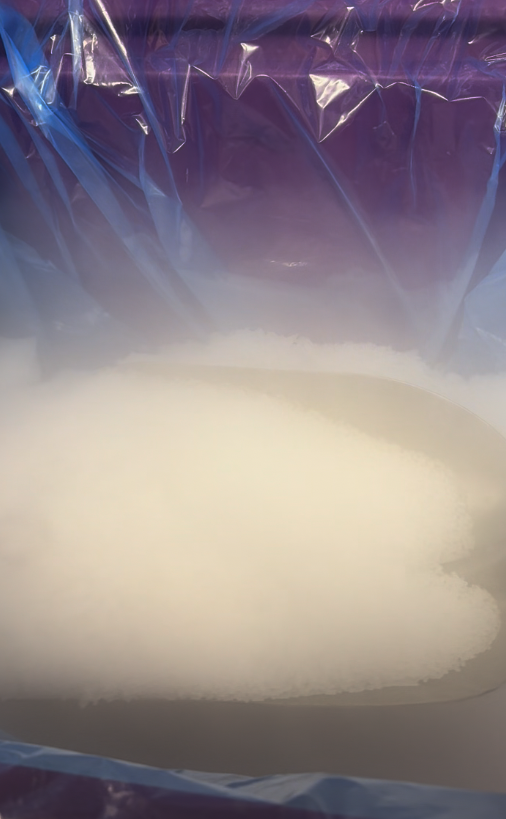
We ordered 1,500 lbs of dry ice for this job — a significant volume that reflects the scale of contamination on this undercarriage. CO₂ pellets were accelerated at high velocity across every corroded surface. The thermal shock causes rust, sea salt deposits, and decades of road debris to fracture and release from the metal instantly.
No chemicals. No water. No abrasion to the base metal. The dry ice sublimates on contact — it simply disappears — leaving a clean, exposed surface ready for treatment with no cleanup, no residue, and no moisture introduced to the metal.
This is why dry ice blasting is the right method for this kind of job. Any water-based cleaning method would introduce moisture directly to already-compromised metal. Dry ice eliminates that risk entirely.
Step 3 — Rust Treatment Application
With the surface blasted clean, we applied professional-grade rust neutralizer across all affected areas. Rust neutralizer chemically converts iron oxide — rust — into iron phosphate, a stable compound that stops the corrosion process at the molecular level and creates a properly primed surface for coating adhesion.
This step is what separates a restoration that lasts from one that fails within a year. You can blast all day long, but if you don't neutralize the remaining rust chemistry in the metal, it comes back.
Step 4 — Second Dry Ice Blast Session
After the rust treatment cured, we blasted again. The second pass removes any remaining loose material, flash rust, and residue left from the treatment process. The goal is to go into the coating phase with the cleanest, most mechanically sound surface possible.
Two blast sessions on a job this size isn't overkill — it's the standard we hold ourselves to at Dry Ice Pro Auto.
Step 5 — Customer Progress Review
Before applying any coating, we walked the owner through a full progress review with the car on the lift. We showed every treated zone, explained what had been done, and asked whether any additional areas needed attention. The customer reviewed the work, approved the condition of the undercarriage, and gave us the green light to proceed.
We don't coat anything without the owner seeing the surface first. No surprises.
Step 6 — Industrial Nano-Ceramic Coating Application
With the surface fully prepped, inspected, and approved, we applied our industrial-grade nano-ceramic coating across the entire undercarriage — subframe, suspension arms, wheel wells, floor pans, and all treated metal surfaces.
This coating bonds at the molecular level, forming a dense, hydrophobic barrier against road salt, corrosion, moisture, chemicals, UV exposure, and extreme heat. Up to 10 years of protection. No reapplication needed.
Once applied, the coating was left to fully cure and dry before the next phase began.
Step 7 — Final Prep, Masking, and Underbody Paint
With the ceramic coating fully cured, we prepped and masked the undercarriage for underbody paint — the final protective layer that seals everything and gives the restoration a clean, factory-level finish.
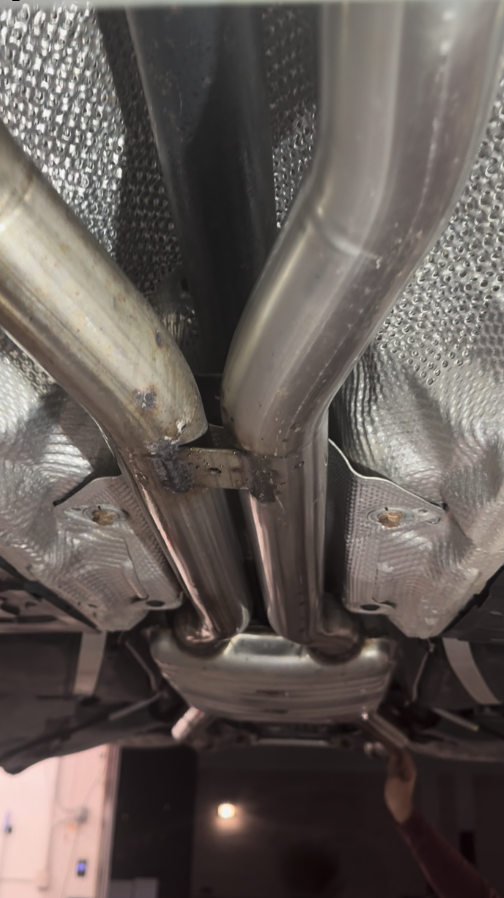
After 35 to 40 hours of total work across all phases, this Audi RS4 left our Tempe shop with a fully restored, sealed, and protected undercarriage ready for years of driving ahead.
The Result: Protected Underbody. Higher Appraisal Value.
A restored undercarriage directly increases a vehicle's appraised value. For any collector car, performance vehicle, or European import, underbody condition is one of the first things a professional appraiser checks. A corroded undercarriage is an immediate deduction — sometimes thousands of dollars off the appraisal. A fully restored and ceramic-coated underbody tells any buyer or appraiser that the car has been properly maintained and protected.
This Audi RS4 left our shop worth more than it arrived.
The owner now has a vehicle protected against future corrosion — whether it stays in Arizona, returns to the Northeast, or eventually goes to auction. The industrial nano-ceramic coating provides up to 10 years of barrier protection against everything the road throws at it.
Does Your Vehicle Need This?
If your car came from the Northeast, the Midwest, or anywhere with heavy winter road salting — there's a good chance the undercarriage is carrying more damage than you realize. And if it's a classic, collector, or performance vehicle, that damage is quietly working against your investment every single day.
At Dry Ice Pro Auto in Tempe, AZ we handle it all — undercarriage restoration, engine bay cleaning, rust treatment, industrial ceramic coating, and underbody paint prep. We serve the entire Phoenix metro area including Scottsdale, Chandler, Mesa, Gilbert, and Tempe.
Call or text us at (520) 808-3132 — Monday through Saturday, 8AM to 7PM. We'll take a look and tell you exactly what your vehicle needs.
📍 617 S McClintock Dr, Suite 1-2 · Tempe, AZ 85281
📞 (520) 808-3132
🌐 dryiceproauto.com
📲 @dryiceproauto
